
Design Insight
Timber Finishes in Modern Kitchen Design
How natural wood brings warmth, texture, and timeless character to today’s kitchen spaces.
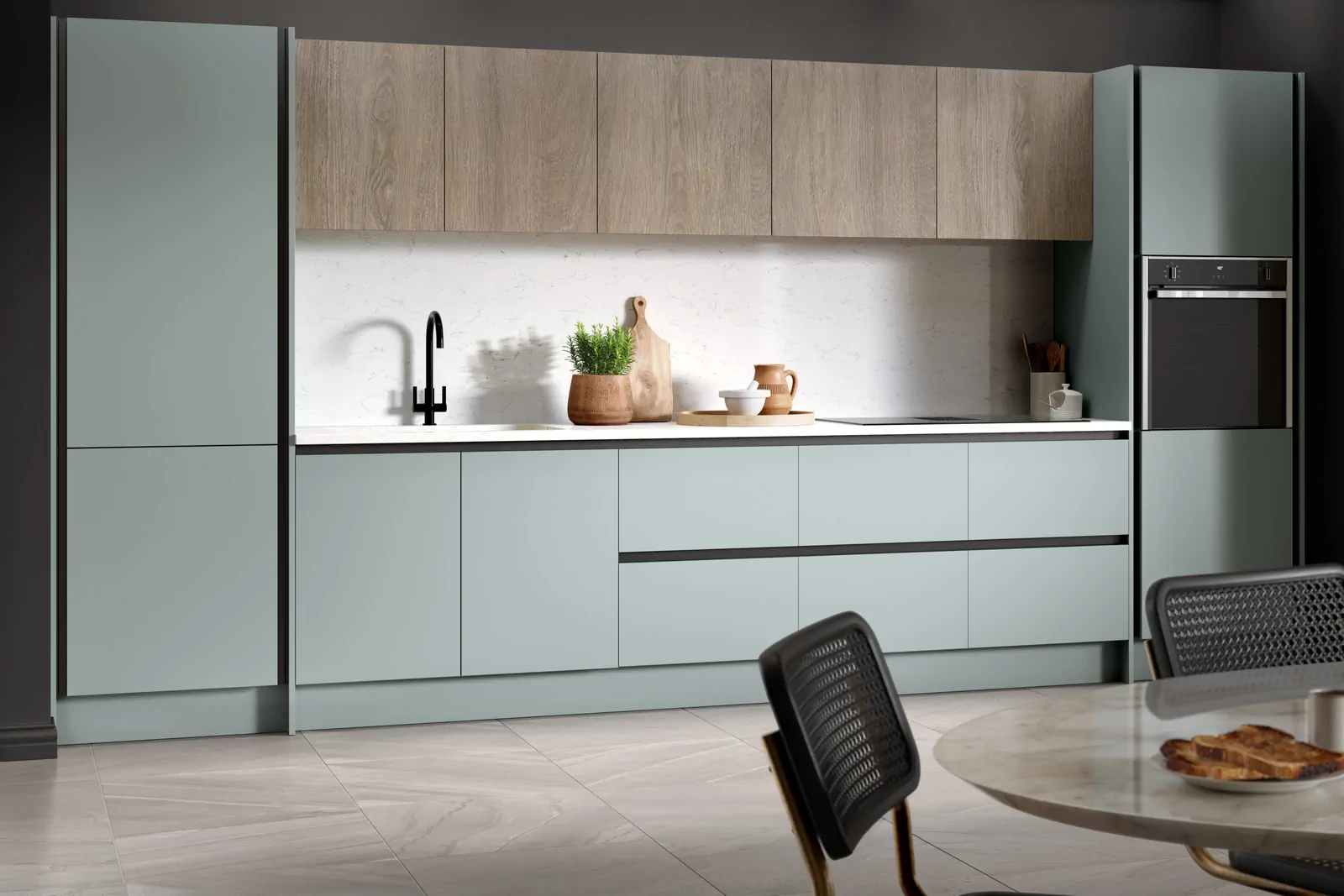
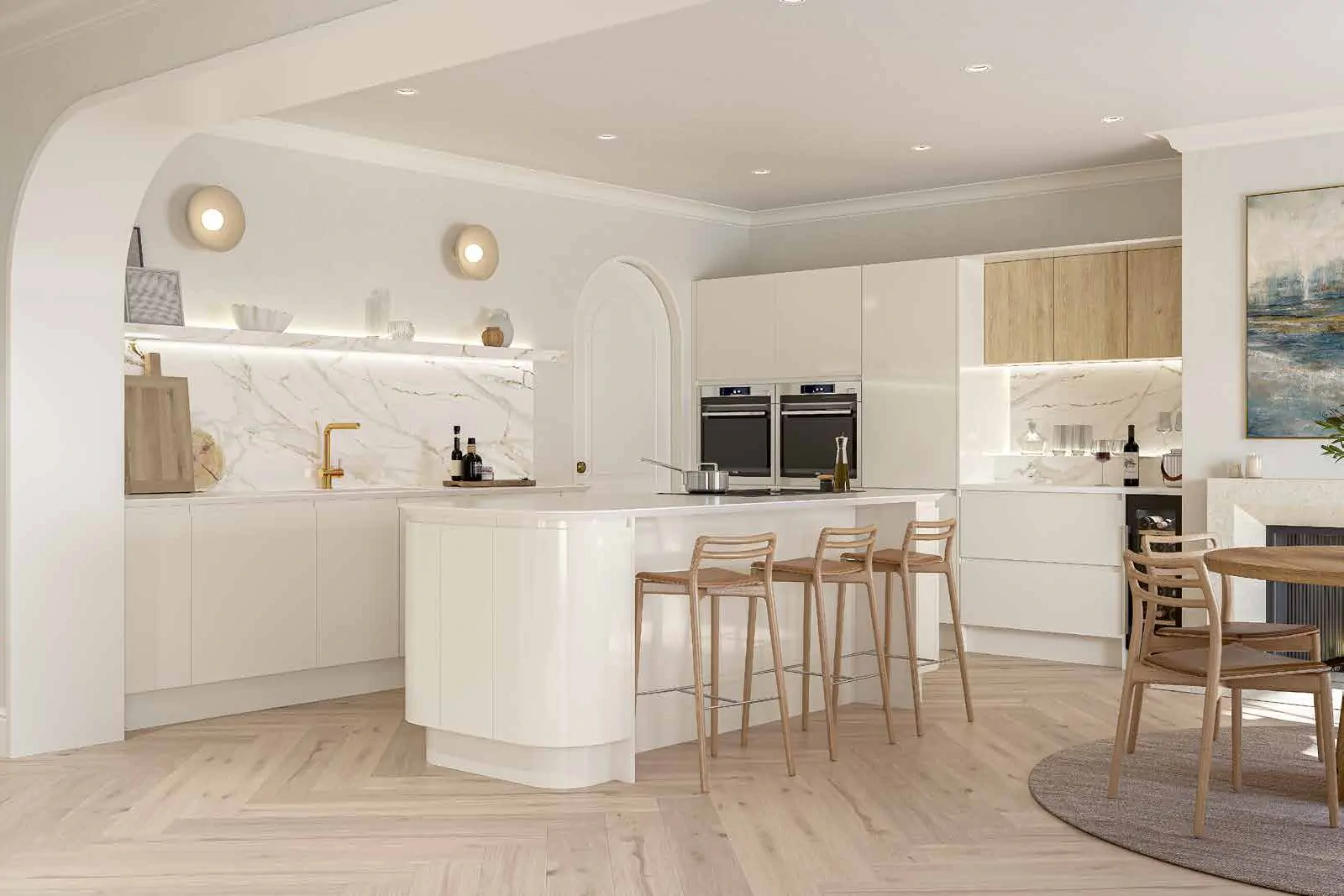
Style Collection: Bella Venice Supermatt Duck Egg & Grey Vicenza Oak Inrail Kitchen
Timber’s Modern Revival
Timber finishes have never truly disappeared — but they are returning to modern kitchens in a more deliberate, design-led way. Rather than covering every surface, wood is now used to balance tone and texture, introducing a warmth that painted finishes and laminates alone can’t achieve.
At Redwood Kitchens, we see this shift as part of a broader movement toward layered design — the art of blending contrasting materials to create depth, calm, and personality. Whether expressed through a single oak feature cabinet or a full island, timber, especially natural timber, gives a kitchen authenticity that feels crafted, not manufactured.
The Role of Timber in Modern Kitchens
For years, painted cabinetry has dominated British kitchen design. It’s brought elegance, colour control, and a soft matte finish that feels timeless. But as homeowners look for warmth and individuality, timber is becoming the material of reconnection — bringing nature back into the heart of the home.
Timber introduces:
- Texture — a tactile surface that responds to light differently throughout the day.
- Tone — soft golden or smoked hues that anchor a space visually.
- Honesty — visible grain patterns that remind us of craft and origin.
Used thoughtfully, it bridges modern precision with natural imperfection, creating rooms that feel both composed and human.
Mixing Materials with Intention
The beauty of timber lies in how well it complements other finishes. In contemporary spaces, warm oak or ash veneers soften sleek lines and industrial materials. A matt taupe or muted green door might be elevated with timber open shelving, or a full-height larder framed in oak to draw the eye upward.
In more traditional settings, pale oaks and natural ash bring light and rhythm to painted shaker cabinetry. Their grain catches the light and adds authenticity without overwhelming the colour palette.
Mixed-material design is about balance, not competition. When executed well, timber contrasts enhance colour depth, define zones, and add architectural character — all without visual noise.
At Redwood Kitchens, we often design with a “core-and-accent” approach: painted or laminate cabinetry forms a calm foundation, while timber accents — shelves, internal cabinets, island panels, or trims — bring variation and highlight craftsmanship. Subtle matt and gloss contrasts allow light to move across surfaces, revealing detail without distraction.
Design Tip
“If you love the warmth of wood but want to keep a fresh, modern look, use it as an accent rather than a base. Try open oak shelving against painted walls, a timber-topped island within a minimalist layout, or oak interiors hidden behind sleek painted doors. The goal is contrast — enough to add character, not clutter”
— Colin, Founder, Redwood Kitchens
The Feeling of Depth
Design is not just about surfaces — it’s about how a room feels to live in.
Timber brings a quiet richness that gives kitchens visual and emotional depth. It softens strong lines, adds natural movement to static forms, and creates spaces that feel crafted and lived-in.
While materials and colours may shift with time, real wood remains constant — a connection to nature, to touch, and to the idea of permanence. In an age of precision and polish, it reminds us that beauty also lies in variation and warmth.
That’s why, at Redwood, timber isn’t a trend — it’s a design language. A way to make modern kitchens feel anchored, enduring, and unmistakably human.
Design That Works Beautifully
From compact kitchens in Spencers Wood to open living spaces across Barkham, we create designs that look stunning, flow naturally, and feel right every day. Let’s start today.
Be Inspired
Get Started

More design inspiration
-
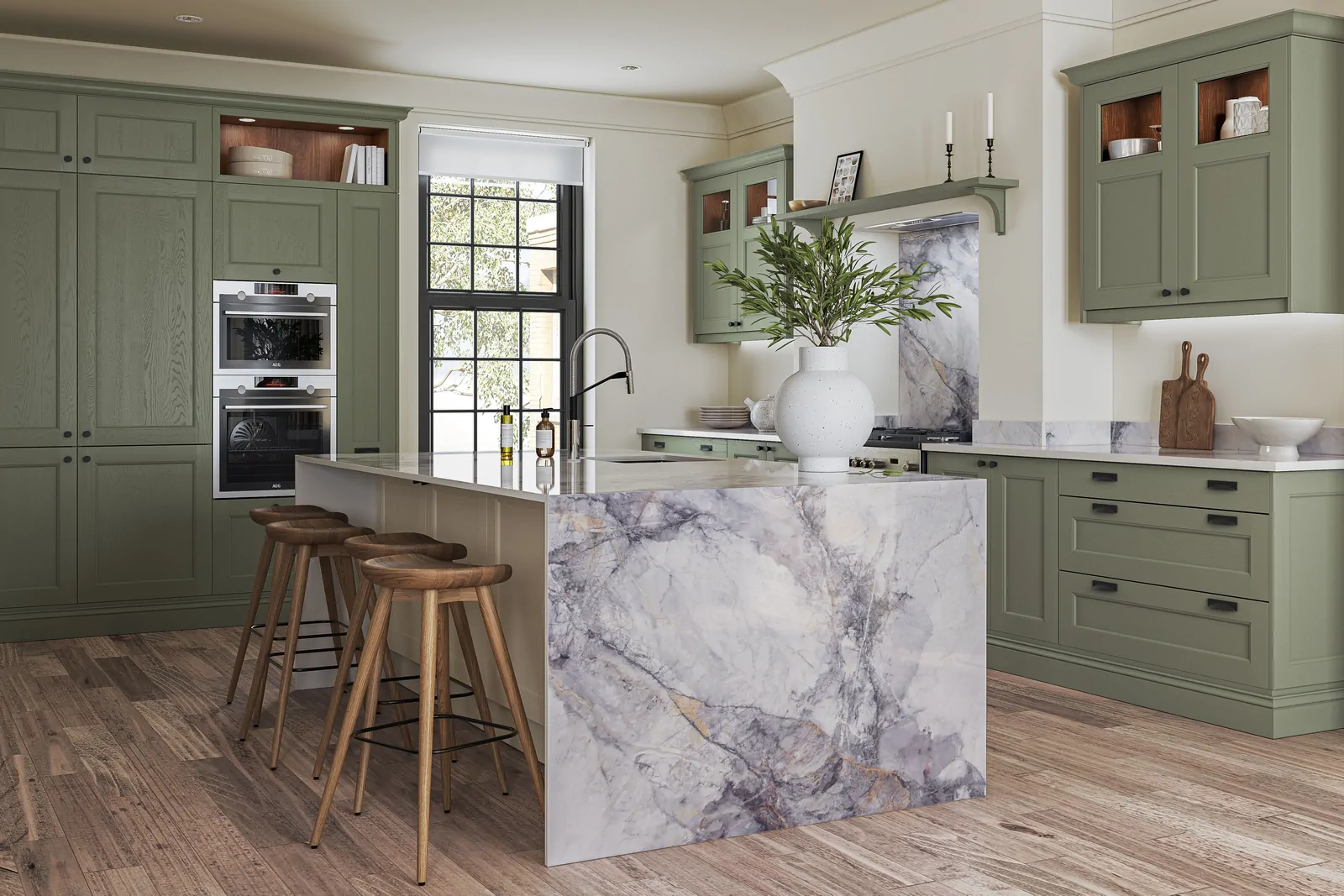
The Art of Layered Design
Layered design adds depth, warmth, and balance to your kitchen. Discover how tone, texture, and… Read more…
-
The Power of Sight Lines in Kitchen Design
Discover how sight lines shape a beautiful, balanced Redwood kitchen. Learn how thoughtful design makes… Read more…