
Design Insight
The Art of Layered Design
Depth, texture, and harmony — how layered design brings warmth, balance, and sophistication to the modern kitchen.
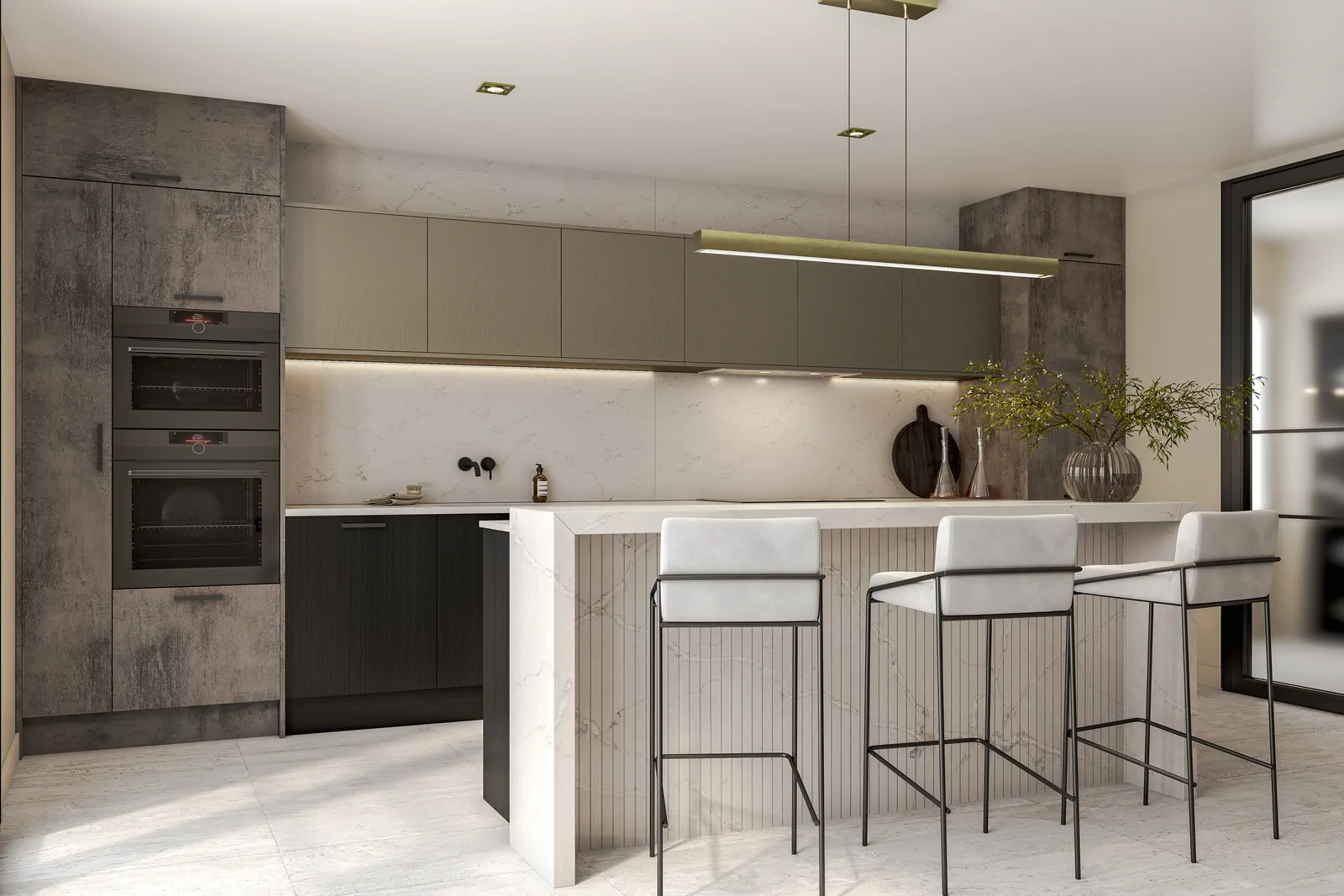
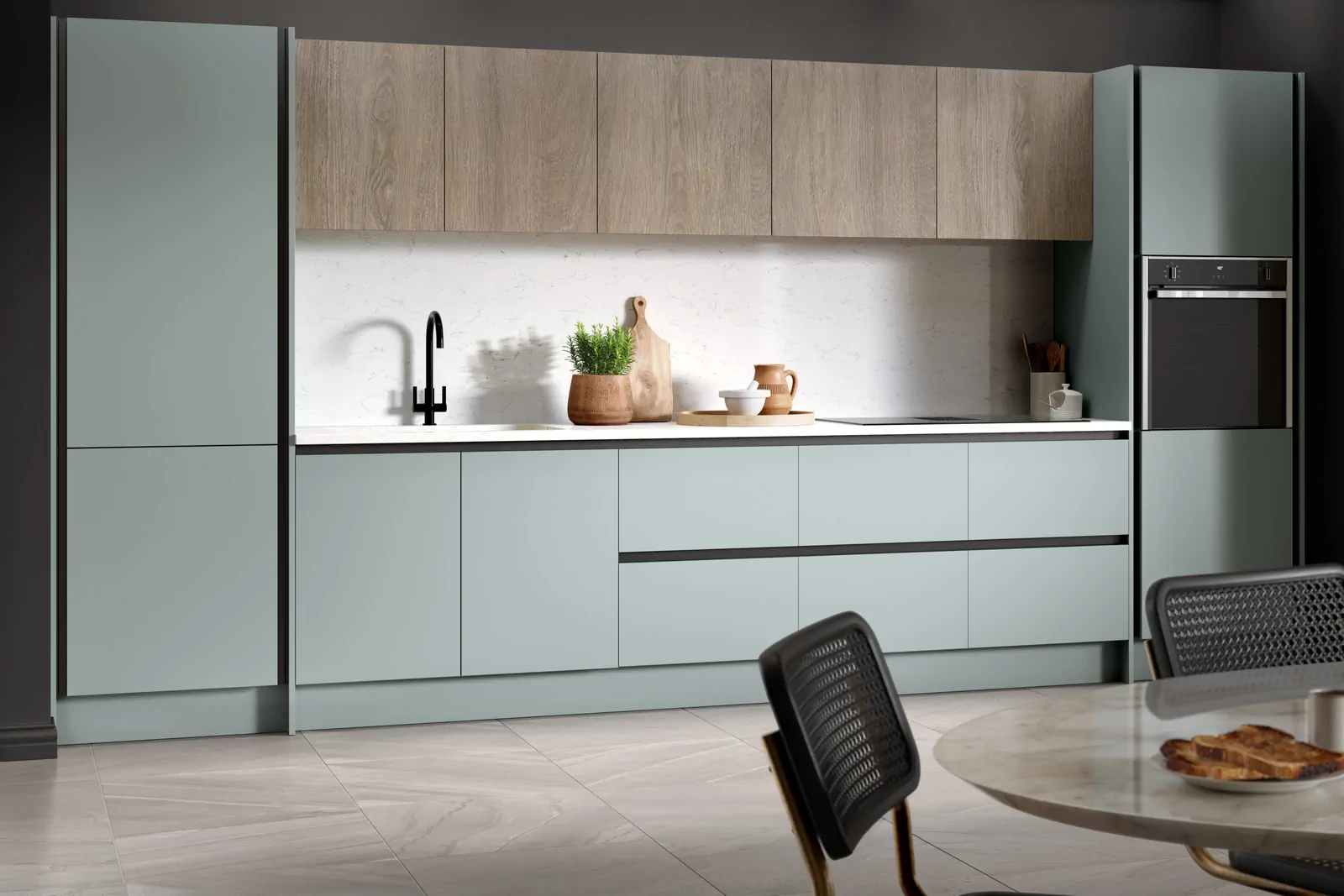
Showroom Collection: Unity Banham concrete, Black Liner Woodgrain & Brushed Champagne
The Beauty of Layers
Step into a beautifully designed kitchen and you’ll notice something special: it feels rich, inviting, and effortlessly balanced. That feeling doesn’t come from any one feature, but from the layers — the subtle interplay of texture, tone, light, and detail that gives the room depth and life.
At Redwood Kitchens, we call this layered design — the art of blending materials, finishes, and form to create spaces that feel calm yet characterful. It’s one of those quietly powerful design principles that separates a good kitchen from a truly considered one.
What Layered Design Means
Layered design is about creating harmony through contrast. Just as an interior designer builds mood with fabric, paint, and lighting, a kitchen designer uses cabinetry textures, worktop materials, and lighting to add visual depth and tactile warmth.
A layered kitchen might combine the cool confidence of Unity Banham Concrete for the tall units (feature picture above) with the soft metallic warmth of Brushed Champagne accent for the wall units and the dark Black Liner Woodgrain for the base units. The mix feels deliberate and refined — never chaotic — because each element has its place and purpose.
It’s a design language that says crafted, not constructed.
Why Layers Matter
Layering adds comfort and longevity. It transforms a functional room into one that tells a story — of balance, personality, and lived-in warmth.
- It creates depth. Subtle shifts in tone and texture make a kitchen feel larger and more dimensional.
- It builds warmth. Layered finishes — wood grains, matt lacquers, brushed metals — soften the geometry of cabinetry.
- It expresses individuality. No two layered kitchens are alike; each reflects its owner’s personality and the designer’s hand.
- It enhances calm. When textures and tones are balanced, the result is a space that feels grounded and timeless.
In short, layers turn a kitchen into a living environment — a place that feels settled, not staged.
How Layers Work Together
Layering isn’t about adding more; it’s about balance and intention. Every layer should earn its place.
- Material Layers
Mix surface finishes to create tactile variety. Pair smooth with textured, warm with cool — think painted cabinetry beside timber trims, or stone worktops offset by brushed metal handles. - Colour Layers
Use complementary shades from the same tonal family. Soft contrasts (like warm grey and stone) feel calm; bold contrasts (like charcoal and brass) create drama. - Lighting Layers
Combine ambient, task, and accent lighting. Downlights handle practicality; pendants and under-cabinet lighting add mood and rhythm. - Detail Layers
Finishing touches — handles, trims, shelving — are your visual punctuation. Repetition of material or finish across zones creates cohesion.
When these layers align, the result is a kitchen that feels instinctively right — even if you can’t quite explain why.
An Example in Practice
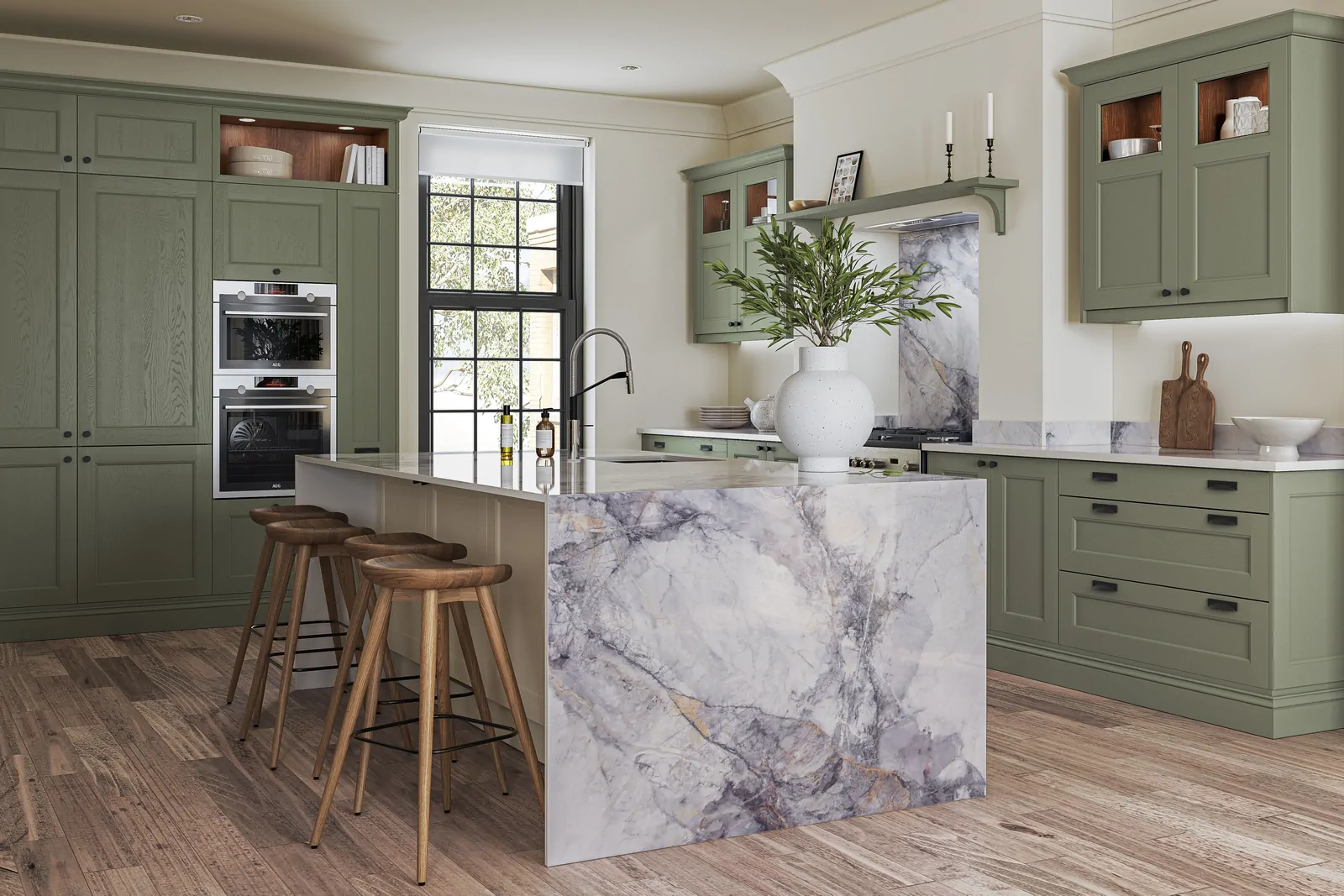
Showroom Collection: Mornington Beaded in Regiment Green & Taupe Grey
In the kitchen shown above — Mornington Beaded in Regiment Green and Taupe Grey — layered design takes on a softer, more traditional form. The painted timber doors add gentle texture, while the contrasting tones create quiet depth and definition across the room.
Warm brass handles and subtle lighting add a final layer of refinement, complementing the classic beaded detailing and natural stone worktop, splashback and dramatic waterfall ends to the island. Every surface contributes something: warmth, texture, or balance.
The result feels calm yet characterful — proof that layered design isn’t reserved for modern spaces. Whether through painted finishes, crafted joinery, or thoughtful lighting, the same principles of depth and harmony apply beautifully in every style of kitchen.
Bringing It Home
If you’re planning your own kitchen, think in layers from the start.
- Start simple. Choose one key material or tone to anchor the space.
- Build gently. Add contrast through handles, feature panels, or complementary finishes.
- Repeat intentionally. Echo key materials in smaller details like shelving, plinths, or accessories.
- Use lighting as glue. Good lighting ties all layers together, highlighting tone and texture.
Layering isn’t a single design decision — it’s the sum of many small, considered choices. That’s why working with an experienced designer matters: someone who knows when to add and when to hold back.
Design Tip
“Layered design isn’t about complexity — it’s about confidence. Every surface, every finish should feel like it belongs. When tone, texture, and light are balanced, the kitchen becomes more than functional; it becomes part of how you live.”
— Colin, Founder, Redwood Kitchens
The Feeling of Depth
A well-layered kitchen doesn’t shout for attention. It reveals itself slowly — in the way light plays across the worktops, or how textures complement one another as you move through the space.
That quiet depth is what gives a Redwood kitchen its character. Because great design isn’t about decoration — it’s about creating spaces that feel natural, enduring, and beautifully human.
Designed for the Way You Live
From growing family homes in Arborfield to elegant new builds across Shinfield, we deliver kitchens that blend design, function, and craftsmanship. Let’s start today.
Be Inspired
Get Started

More design inspiration
-
Timber Finishes in Modern Kitchen Design
Discover why natural timber is returning to kitchen design. Redwood Kitchens explores the current trend… Read more…
-
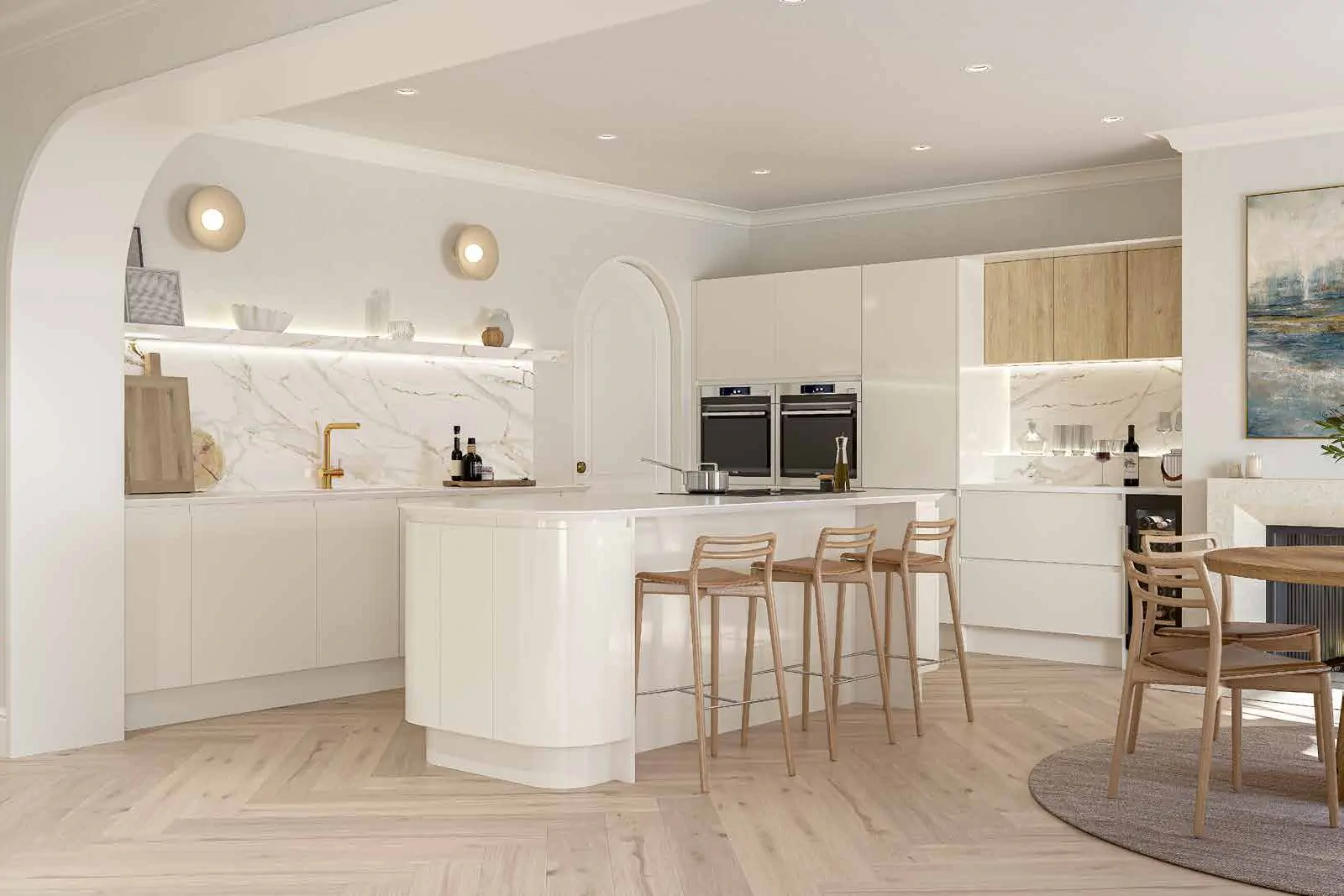
The Power of Sight Lines in Kitchen Design
Discover how sight lines shape a beautiful, balanced Redwood kitchen. Learn how thoughtful design makes… Read more…